Thursday, August 5, 2010

Three Whoopees and two Wait-and-Sees

We recently received three pieces of good news about transportation in Michigan, but there are still two important issues waiting to be resolved:

  1. Whoopee! In the Detroit area, voters on August 2 strongly affirmed their desire to keep SMART bus service by renewing the millage. The margins were 71.8% in Macomb County, 73.7% in Wayne, and an astounding 78.1% in normally conservative Oakland County. Does this indicate a major shift in desire to see strong public transit in Michigan? (Here's the article in the "Freep".)
  2. Whoopee! Also on August 2, US Department of Transportation Secratary Ray LaHood held a joint press conference in Detroit with Mayor Bing to announce significant progress in the M1 Rail project, to be built on Woodward Avenue. This project is especially important because it has moved forward largely through private initiative, led by Detroit businessmen Roger Penske, Mike Illitch, Peter Karmanos, and Dan Gilbert. Wake Up Washtenaw is dedicated to progress through public-private partnership. Of course it's well known that the Obama administration has made public development of improved rail service a priority, but private participation means the entire community will be behind sustainable development - not just the public sector. (Here's what Crane's had to say.)
  3. Whoopee! The Michigan State Legislature last week passed the Complete Streets bills (2010 PA 134 and 135). We've become the 14th state to require new street designs to include safe pedestrian and bicycle facilities - not just more traffic lanes. This legislation was co-sponsored by Washtenaw County's own Rep. Pam Byrnes. :-) (The Michigan Complete Streets Coalition has the details.)

But wait...

  1. Sigh. No legislation yet on a regional transit authority for all of the Detroit area.
  2. Sigh. No resolution to the inadequate funding for Michigan's Amtrak service.

Wednesday, August 4, 2010

What About Low-speed Rail?

This morning I read Hannah Clark's article, "Time for Better Railroads in Michigan?" and found a good update on what's going on in southeast Michigan. But the article is written from a northern Michigan perspective, and had this observation:

“I’d love to get on a train and go Up North, if it took four hours,” Mr. Steudle [MDOT's Director] said. “But, right now, it takes nine. It’s going to take a lot of money in physical infrastructure improvements.”

Yes, it would take a lot of money - both up front and ongoing - to maintain the tracks to Traverse city and Petosky for 79 MPH passenger service. (Not as much as maintaining a freeway for 70 MPH auto traffic, but let's face it: we do have a double standard.) But nine hours isn't really much time - if it's at night. Given comfortable sleeping and dining accommodations, an overnight train from southeast Michigan to Traverse City could have a big draw. Here's a word-picture:

Early on a summer Friday evening, a classic-looking train pulls out of the Troy-Birmingham Transit Center. Young families and retired couples have parked in the attached structure and boarded the train, some to coaches with reclining seats, others to roomettes and bedrooms with bunks and snowy linen. Sleeping accommodations at various price/comfort points offer a good night's rest to a range of individual and family travelers.

An hour after starting, the announcement comes through on the PA: it's time to serve dinner. Just as on many dinner-excursion trains now, an accomplished chef is on hand to cook up gourmet meals. Drinks, snacks, and food that appeals to kids are also available in the observation-lounge car. A game-arcade room is available for the kids who tire of watching the Michigan summer evening slipping past. For those who do appreciate the view, there's a dome car with an even better view of the countryside.

Gradually, the sun sinks to the horizon in the northwest. Sunset colors swell, and gradually fade from sky. While the older folks sink into their bunks to be rocked asleep by the gentle motion of the train, the teens hang out in the lounge and dome cars until well into the wee hours. Small children reluctantly snuggle in while their parents try to calm down their excitement - all night on a train!

An early sunrise Saturday morning finds the train rolling through the pines and birches of the northern lower peninsula, filled with sleeping people. At 6:30 a.m., the PA crackles to life with the announcement that the breakfast buffet is open: omelettes, pancakes, railroad french toast, fruit, yogurt, cereal, pastries, coffee, tea, and milk. Many ignore the announcement, rolling over to catch a few more Zs, but those who make their way to the diner find both food and friendly chat as they watch the lakes and hills of Wexford County slide by.

Shortly before 9 a.m., the train rolls in to Traverse City and parks on a siding. Most of the passengers head out to the waiting rental cars, tour buses, or nearby hotels. Some have elected to use the train as their base for the weekend, renting their bedrooms over Saturday night and returning to Southeast Michigan Sunday evening. Some will be returning after a week or two of vacationing "up north".

The trip back down is much like the northbound trip. The same services and accommodations are offered, and the schedule is timed to leave early Sunday evening, arriving at Birmingham-Troy early enough to allow working folks a reasonable commuting time.

How does that sound?

I think it sounds very comfortable, a lot of fun, and pretty expensive. Driving would certainly be cheaper - no question. Subsidies might be arranged: not government subsidies, because this isn't essential transportation. It's more like a cruise on land. But it would bring visitors and tax revenue to Northern Michigan. Hotels, resorts, restaurants, area visitors' bureaus and chambers of commerce could well see it as advantageous to offer packages which include some level of subsidy negotiated with the railroad or train operator. It could work - someday soon.

Here's the reference to the article that spurred my interest::

"Time for Better Railroads in Michigan? Fed’s big bucks, local forums build interest in rail transit, freight", by Hannah Clark. Great Lakes Bulletin News Service, referred to in Michigan Land Use Institute's site.

Saturday, July 3, 2010

SEMCOG Swings Toward Transit

You may recall that SEMCOG, the Southeast Michigan Council of Governments, is our "Metropolitan Planning Organization" (MPO). In the scheme of things these days, MPOs are an important link in the transportation funding chain. All requests for transportation dollars in urban areas like southeast Michigan have to go through an MPO before any federal funds will trickle down. And before any such requests make their way to Washington, they have to go through a public comment period. So Wednesday's request for public comment is an important phase in SEMCOG's latest revision of plans.

It's sad, though. Really sad that SEMCOG has to make these revisions. You see, Michigan's citizen's haven't come up with enough money to match the federal grants available to us, so SEMCOG has had to cut out some expensive projects and go for more modest ones. Most of the projects we can't afford to match have been "postponed" 2-4 years, but of course if we Michiganders don't decide to invest a little more in our infrastructure, they'll be postponed again. And again...

What's being cut out? Here are the biggies:

  • Replacing the Fort Street bridge over the Rouge River in Detroit (we lose $38.6M federal funds to save $6.7M of Michigan taxpayers' hard-earned money);
  • Just saying "No" to $30.0M federal dollars to save $4.6M Michigan money for reconstructing 3 miles of VanDyke in Macomb County;
  • By turning down $16.4M for M-53 reconstruction and intersection improvements in Macomb, we save an incredible $3.6M for Michigan.
  • In Washtenaw County, we're only saving $1.3M of our dollars by foregoing $8.8M federal dollars for rehabilitating a mile of US-12 through Saline.

In all, SEMCOG is waving off $100,328,000 of federal money in canceled projects. But wait! Not all of that is lost, because that Michigan money, together with another half million of state money, is being invested in fewer, less expensive projects. And instead of being all highway-oriented, most the added projects are more sustainable transportation modes. Here's what each area would get if this proposal is approved:

  • The Detroit area: new buses for SMART, computers for DDOT, a new vehicle for the People Mover, and a freight rail spur to serve the river port ($1,505,000: $1,220,000 federal, $226,000 state, $59,000 local);
  • In the wider SEMCOG area: a hand with Livingston County's LETS mobility assistance, vans for Boysville, and a transportation demand system for Michigan Rideshare; ($424,000: $343,000 federal, $81,000 state)
  • Dearborn: help to build its new rail+bus station ($28,204,000 all federal high-speed rail funds);
  • Washtenaw County: a hand with rebuilding the Blake Transit Center in downtown Ann Arbor, together with improvements for some heavily-used bus stops; and operating assistance for People's Express in the rural western parts of the county ( $1,134,000 $938,000 federal, $12,000 state, and $184,000 from AATA "farebox" revenues). In addition to the transit assistance, this proposal acknowledges Ann Arbor's plan to spend $2.5 million of its local funds to reconstruct three blocks of Stone School Road, between the I-94 overpass and Ellsworth Road; and requests $1,099,000 in unmatched federal funds for "signal interconnect" in various locations along Packard, Hewitt, Carpenter, Ellsworth, and Michigan Ave.

Here's a table summarizing the proportions of road to non-road investment:

 
Federal
State
Local
TOTAL
Road Totals $2,344,000 7% $21,343,000 98% $2,277,000 90% $25,965,000 46%
Non-road Totals $29,644,000 93% $329,000 2% $243,000 10% $30,216,000 54%

State and local funding is still overwhelmingly road-oriented, but federal money is being channeled primarily to projects oriented toward public transportation: buses, vans, rail and stations, software for transit management. Way to go, SEMCOG!

You can read the Public Notice and download a PDF of the details at http://smcg.informz.net/SMCG/archives/archive_888634.html. Remember, though: these are just proposals. SEMCOG has opened the public comment phase until July 29, 2010, so let them know how you feel about this.

  • Mail: SEMCOG Information Center, 535 Griswold, Suite 300, Detroit, MI 48226;
  • Faxes: 313-961-4869;
  • Email: infocenter@semcog.org.

Comments can be made in person at the following meetings, all held at SEMCOG offices: Buhl Building, 535 Griswold, Suite 300, Detroit, MI 48226.

  • Transportation Improvement Program Development Committee (TIPDC), Thursday, July 15, 2010, 10:00 a.m.; discuss proposed actions and recommend Transportation Advisory Council support;
  • Transportation Advisory Council (TAC), Wednesday, July 28, 2010; 9:30 a.m.; present and discuss actions and recommend Executive Committee approval; and
  • Executive Committee, Thursday, July 29, 2010; 1 p.m.; discuss amendment and FY 2011-2014 TIP and take final action to approve.

Tuesday, June 1, 2010

From the Middle East

(Originally written April 25, 2010)

It's been a busy few weeks in Lebanon, Jordan, and Israel! I wasn't there to study transit or development patterns, but there's no escaping the topic once you get into the habit of thinking about it. So here are a few reflections...

Lebanon

After a week in Lebanon, you can be sure I came up with some great ideas to improve their transportation - but of course, they're probably worth very little in the economic and political realities of 21st century Lebanon!

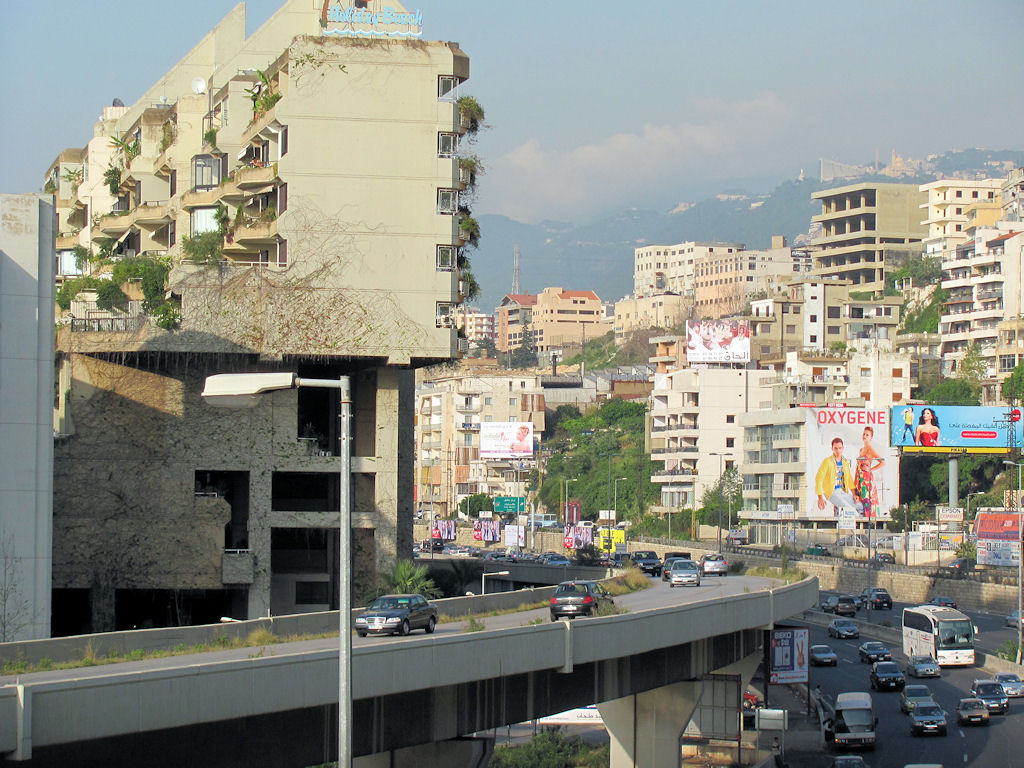
Lebanon is a prosperous little country, a mini-California in its climate and geography. During the long civil war in the 1980s and '90s, many Lebanese citizens fled to other countries (especially the Persian Gulf), where they worked hard and sent home lots of money. For the most part, this was invested wisely in buildings and infrastructure, so even though Beirut and several other Lebanese cities were bombed by the Israeli Defense Forces in 2006, there are very few scars left in busy Beirut. But it would not make much sense for Lebanon to invest heavily in infrastructure until the situation in the Middle East stabilizes and the Lebanese central government is able to assert its authority over the entire country.

Even if politics and international relations weren't tremendous factors, geography would be a big challenge for Lebanon's transportation structure. Most of Lebanon's population lives in a narrow strip of land running north to south along the Mediterranean Sea, hemmed in by mountains that, in places, actually jut out into the sea. Far from being a solid rampart, though, the mountains are riven by steep valleys that run mostly at right angles to the coast.

For some reason, there is very little public transportation in Lebanon. What few buses I saw were weary-looking 20-25 passenger affairs, apparently still in their gray primer paint; mainly Toyota Coasters. But as I mentioned, Lebanon has prospered, and most people seem to own a vehicle of their own. Some are certainly run-down and battered, but there are surprising numbers of new Mercedes and BMWs zooming around. US-brand cars are pretty few and far between, with Japan, Korea, and Germany the main providers, though the French have a solid foothold, and even the Chinese have a small toehold. The result of all this is traffic that makes I-94 at rush hour look like a picnic. It doesn't help that the Arab way of driving is very different from ours, resulting in some pretty hair-raising experiences until you realize that there's a system. Very few accidents actually happen, but it takes a long time to get anywhere, and there are no realistic options besides a car of your own, or a taxi. (I'm so glad I didn't try to rent a car.)

Most of the traffic is concentrated in the coastal zone, which has an expressway reminiscent of I-5 through Seattle or Portland. This is the western backbone of the country, which needs a robust public transportation axis on which to hang a multitude of east-west feeder lines. In effect, that's what the road system does now, but its capacity is inadequate, especially in the Beirut metro area. What a shame the coastal railroad was torn up 20-30 years ago - the capacity of rail is badly needed now. A moderate-speed railway along the coast would be ideal, topping out at 120 kh/h or about 85 mph - no need for a bullet train in this small country. It would need to be at least double-track all the way from north to south, with a 4-track main for local commuter service in the Beirut area.

The main part of the capital juts out on a peninsula into the Mediterranean, and a crescent-shaped rail loop following the coast to the downtown areas would work nicely. But there is a large urban area in a valley extending east from the coastal region. I'd vote for a busway along the east-west expressway into the city as the spine for this area.

In fact, all the east-west lines are ideal for buses. Many of the valleys are very steep-sided - canyons, really - so the settlements are often on the hilly ridges rather than in the valley-bottoms. As a result, the roads leading up from the coast are extremely steep and winding, quite unsuitable for rail, although in some places cable cars or funicular railways might meet short-distance transportation needs. Probably the ideal solution would be trolley buses for towns closer to the coast, and diesel buses for the more distant ones.

Electric buses offer several advantages over diesel in this environment. For one thing, the air is quite polluted in the densely-populated city, and zero-emission vehicles would be a great help. Lebanon generates quite a respectable percentage of its electricity through hydro-electric generating stations, so the pollution wouldn't simply be moved elsewhere. The rapid acceleration of electric vehicles is very valuable on steep hillsides, as you know if you've ridden trolley buses in San Francisco or Seattle. The ability to regenerate electric power while braking on down-slopes could save a considerable amount of energy - not quite enough to power the up-hill vehicles, but enough to help a great deal. Of course, the initial investment is high, but in a relatively prosperous, small, densely-populated metropolitan area like Beirut, it would not be an insuperable obstacle.

Unfortunately, the real obstacle is not so much financial as political. The deep, long-standing distrust between members of the different ethnic and religious groups in Lebanon pose a threat that would make it difficult for investors to justify long-term improvements in infrastructure. What a shame - Lebanon is a beautiful country with tremendous potential for success.

Amman, Jordan

I didn't spend enough time in Amman to make any meaningful observations, except that there are a lot of buses, large and small. Amman was the capital of the ancient Ammonites, mentioned several times in the Old Testament, and like most ancient cities, Amman's streets aren't laid out in anything resembling a grid. However, expressways have been built linking the neighborhoods together, tunneling through some hills and bridging deep gullies where necessary. This is a city where buses make sense, though electric (trolley) buses would be preferable to diesel buses if the capital investment weren't so high. I'm told that most of Jordan's electricity is generated with natural gas, so the overall CO2 would only be reduced a little, but particulate matter would be removed from the city. Probably not worth the investment until the cost of diesel skyrockets.

Jerusalem

The Holy City is a dense, bustling metropolis with a lively public transportation network. As of April 2010, the only public mode is buses, but there is a wide variety of them. Egged, the Israeli public transport cooperative, runs lots of full-size and articulated buses, mainly from the German firm MAN. It's a bit startling to American eyes to be looking at a street which to us appears to be a narrow, quiet residential street, and suddenly see a huge, articulated bus come roaring along it, packed with people, both sitting and standing. In addition to Egged, there is a company called Puma that runs large buses, but they tend to be older and appear accustomed to hard usage.

An American woman, an acquaintance who rides the buses frequently, mentioned that she had gotten on one at about 10 PM one night to go home, and had ended up having to ride it for an hour and a half. Why? Because at one stop, about 40 orthodox Jewish men had gotten on the already well-patronized bus, and were squeezed into a solid mass in the aisle. For a woman to try to push her way through such a mass of Jewish orthodox manhood would be absolutely and totally taboo. So when the bus came to her stop, she had to stay on and ride it around its entire route.

Then there are the mini-buses. These hold 10-20 people and run from the city to the outlying towns. They appear pretty much alike, except that the ones going to Jewish areas have blue stripes, and those going to Palestinian towns have green stripes. Of course, there are also huge, luxurious tour -coaches, which aren't exactly public transportation, but which seem almost more numerous than their humbler public brethren.

Most interesting is the Old City. There is only one kind of transportation there: your feet. The Old City is a maze of narrow passageways, often roofed over, between shops, houses, monasteries, hostels, churches, mosques, yeshivas, more shops, and who knows what else. I went into the Old City a number of times, and when I went alone I never failed to get lost trying to get out. Fortunately, getting lost was more of an adventure than a problem!

The Old City's ways are paved with stones worn smooth by millennia of pedestrians. Many are steep and have steps, but these all have little built-in stone ramps just wide enough for the push-carts used to supply the shops with their goods. I was warned that if you hear a kid yelling behind you, it's best to move to the side quickly, since the youngsters employed to push the carts love to zoom down the hills scattering tourists and residents alike.

The buses run only in the newer parts of the city, which is growing in population and area. So, guess what? Jerusalem is building a light rail system! Several busy streets in the new sections are torn up to make way for the rails and stations, and there is a wonderful, curved suspension bridge designed by the renowned Spanish architect/engineer, Santiago Calatrava. Señor Calatrava took a practical problem - a confined, busy space for a tight turn - and created a work of art, a lovely flight of fancy. If more elevated railways combined beauty and utility this way, cities like Chicago would be a wonder to behold.

Tuesday, March 30, 2010

The [High Speed] French Connection

Today I attended the Midwest High Speed Rail Association's annual meeting in Chicago. The most interesting talk was from Monsieur Guillaume Gernin, of the Société National de Chemins de Fer Français (SNCF, the French national railway company). I want to tell you about it because high speed rail (HSR) is a key component of sustainable transportation and development. When properly integrated with other modes of transportation (local and regional transit, air, road, pedestrian, and bike), HSR enables people to move rapidly and seamlessly with little or no expenditure of fossil fuels or emission of greenhouse gasses. It can radically change development patterns and reduce sprawl by clustering residential and business development around stations and reducing people's need to own multiple private vehicles.

A little background: on December 11, 2008 (my birthday!) the Federal Railroad Administration (FRA) issued a "Request for Expressions of Interest in Designing, Building, and Operating a High Speed Rail System" along one or more of eleven designated HSR corridors. This was part of the Obama administration's effort to bring HSR to America.

SNCF is a shareholder-owned company, though the major shareholder is the French government. In addition to operating some of the fastest HSR services around, SNCF has multiple subsidiaries and joint ventures in many parts of the world, including some in North America - and they'd like to expand their operations here. With that in mind, they submitted four Expressions of Interest in response to the FRA's request - detailed proposals for HSR in four areas: Texas, Florida, California, and the Midwest. You can get the entire 256 page Midwest PDF document here; the entire set is linked here.)

What makes this especially interesting is that SNCF has such extensive experience running HSR in France and designing systems for other countries. Their first HSR, between Paris and Lyon, began in 1981. Theirs was the first HSR in Europe, though Japan's Shinkansen predates it by 17 years. In other words, they have credibility.

They also make a profit on their HSR operations. It's extremely popular in France (as is HSR throughout Europe), giving all of SNCF about $1.75 billion USD profit margin in 2007, according to Wikipedia - though M. Gernin says other SNCF operations in France lose money.

Sounds good, but what would it cost? SNCF estimates the construction and equipment for the entire Midwest at $68.5 billion in 2009 US dollars. Compare that with the $8 billion appropriated under ARRA, and it seems pretty overwhelming.

But SNCF estimates operating revenues would pay back the initial costs in about 15 years. And consider the construction cost of the US Interstate Highway System, about $1.3 trillion, unadjusted for inflation. None of that has been paid back - though of course having the system has brought immense economic value...and changed development to the sprawl patterns we're living in today.

So recouping the investment in 15 years is pretty astonishing. It would be unbelievable, except for the wide and deep experience of SNCF. Their submission of the Expression of Interest was a business decision, based on the expectation of long-term profitability.

SNCF doesn't expect to go it alone. They expect to operate in partnership with government: 54% of the initial capital would come from government sources, and the rest from the private sector through joint venture partners and investors. After these are paid back, they stipulate that no operating or maintenance subsidy would be needed, based on their experience elsewhere. Wow.

The Midwest system SNCF proposes would operate from a hub in Chicago to end-points in Minneapolis, St. Louis, Detroit, Cincinnati, and Cleveland. Naturally, they don't expect to build the entire system at once. They suggest starting with O'Hare Airport - Milwaukee - Madison - St. Paul - Minneapolis and O'Hare - Fort Wayne - Toledo - Detroit, but of course that could change.

What would the system consist of? Dedicated double-track, much of it elevated. Trains would be standardized electric double-deckers. (M. Gernin said that when they started building HSR in France, "we had no idea we'd be so successful" and trains quickly became crowded; hence double-deck equipment from the start.)

How to achieve profitability? Their business model in France is based on the yield management system pioneered by US airlines. The system is based on the idea that the earlier people pay, the lower their price should be, and that popular times and dates cost more than less popular ones. Another factor in their financial success has been to provide connectivity with other modes of travel, especially air, and interoperability between high-speed and standard rail lines, so that high-speed trains can continue at lower speeds beyond the end of the dedicated tracks, and take passengers to a larger number of destinations.

Other factors critical to success: "de-risking" the process by public-private partnership, which reduces the risk both to taxpayers and investors; and including the company that will actually operate the trains in the earliest stages of the process, to insure there are no surprises or unworkable decisions made during the planning.

Sound too good to be true? Well, it does to me, frankly. Although SNCF has a history of successful HSR building and operation, US governments have a history of suspicion of foreign companies and of haggling projects to death. Just because SNCF made it work in Taiwan, Korea, Belgium, and Holland doesn't mean we can let them make it work here.

Guess I'm just feeling cynical. I sure hope I'm wrong!

Tuesday, March 16, 2010

Progress Here and Elsewhere

Rail is beginning to move in Michigan and elsewhere!

M-1 Rail

The Woodward Avenue rail project is making good progress. Matt Cullen, the CEO of M-1, was interviewed the other day by Kelli Kavenaugh for Model D Detroit. He said the funding is almost all in place, and the M-1 team is working with MDOT on a complete redesign of Woodward Avenue from Hart Plaza to Grand Boulevard (the extent of the M-1).

For the redesign and rails to happen, a detailed Environmental Impact Statement (EIS) has to be submitted, and the state expects that to get done in 9-12 months. From there, construction would take a year or two, so we could expect the trains to roll in 2013. The second phase, to Eight Mile Road, could then get started and would take a couple of years more, bringing the trains out to the suburbs as early as 2014. Read the interview...

Amtrak

I attended a Town Hall Meeting in Chicago on March 6 put on by Amtrak and sponsored by Trains Magazine. Here are some take-away points:

  • Want to photograph Amtrak facilities? To avoid trouble from police and citizens concerned about terrorists, just let the nearest Amtrak or local authority know what you're doing. It's our constitutional right as Americans to photograph trains and stations, but it's also true that terrorists photograph their targets extensively to better plan their attacks.
  • Amtrak is planning to replace its equipment gradually in a continual upgrade process that will allow domestic rail equipment manufacturers to build facilities with some assurance that they won't be subject to deadly boom-and-bust cycles. Amtrak has always been a low-budget operation. Their passenger cars average 30 years old and several million miles of service. The oldest car in the fleet is a diner build in 1948.
  • Beginning in 2012, states will have to pick up the tab for operation of corridor trains, including our Wolverine Service (Pontiac-Chicago). This according to an Act of Congress, in the politically popular game of Pass the Hot Potato. Let's start letting our legislators know if we find that service useful, since we'll have to actually pay for it ourselves soon. (By the way: Amtrak operations recover 80% of their own cost, far better than most US transportation agencies.)

China

According to Zachary Shahan in a CleanTechnica, article based on Hong Kong's South China Morning Post and the Edmonton Journal, China is well on the way to constructing high-speed rail lines to connect it with Mongolia, Russia, Southeast Asia, India, Pakistan, and Europe. The high points:

  • China completed the world's highest rail line to Lhasa, Tibet, in 2006. (It's not high-speed, but uses US-build General Electric diesel locomotives and tops out at 16,640 feet.)
  • China completed the world's fastest high-speed rail line, from Wuhan to Guangzhou, in 2009. The express runs average 217 MPH, using equipment built in China, based on German (Siemens) and Japanese (Kawasaki) designs. It easily outpaces its nearest rival, France, whose top in-service average is 172 MPH.
  • Though already spending $300 billion on its own high speed network, China plans to build rail links to 17 other countries through barter agreements, at no monetary cost to them. China is more interested in rights to raw materials for its manufacturing than in money.
  • Negotiations are already said to be taking place between China and 17 other countries. China says the other countries approached it first, wanting to make use of Chinese experience and technology to build railways that would enable them to export their raw materials to China more effectively.
  • Building and managing such a rail network throughout Asia would cement China's position as the undisputed leader of commerce in Asia. Who could doubt that it would enhance their political clout there, as well?
  • The best-case scenario calls for completion of the network in 10 years. Whether or not it gets done in that time-frame, there's no doubt that China will get started on it soon. They have the money. They need the resources. They really want the political clout.

Conclusion

Rail transportation is clearly making progress: in Detroit, in America, and in Asia. I'll let you draw your own conclusions about how much progress is being made, where.

Thursday, February 18, 2010

Commuting in Maryland

Returning from sunny climes on Amtrak, I stopped in DC and Maryland yesterday to check out their commuter rail facilities.

On the way into DC, there was lots of evidence of transit-oriented development (TOD) in the Virginia suburbs, like these office+apartments near the Alexandria Amtrak/Virginia Rail Express/Metro station.

I spent the night in Baltimore, continuing from DC Union Station. "Make no small Plans," wrote Daniel Burnham, architect of that noble station and one of my personal heroes, "they have no power to stir men's blood."

During a refreshing pause in the lower level food court (above), I thought about which of two roughly parallel commuter lines I'd take to Baltimore. MARC (Maryland Area Rail Commuter) evolved from local service of the Baltimore & Ohio and Pennsylvania Railroads, crystallizing as a state-run service in 1976 with the collapse of private passenger service through the US. Michigan faced a similar decision at about the same time, but took a different route: we killed our commuter rail subsidies in the 1980s. SEMTA (Detroit-Pontiac) lost state funding and died in 1983, and the Michigan Executive (Detroit-Ann Arbor) perished of the same cause in 1988.

I decided to start on the Camden Line (Washington Union Station to Baltimore Camden Station) which runs over the B&O tracks on which service began in the 1830s . It's a diesel-hauled double-track line; my train was pulled by this GP40WP-2 (shown here at the Camden end of the line, only 4/5 of a mile from Mount Clare Station, the first railway station in the US, started in 1828).

The single-level Sumitomo/Nippon Sharyo coaches are a bit cramped with 3+2 seating; I managed to read on my laptop, but typing was impossible, even though my neighbor was a slender young woman.

In the morning, I took the a Baltimore light rail train to Penn Station, chatting with a friendly woman who was taking a passenger survey.

Baltimore's Penn Station is beautifully designed, but is showing its age and in need renovation and ADA upgrades.

I caught a Penn Line train back to DC. As you might guess, this runs along the former Pennsylvania main line, electrified in 1935. MARC uses AEM-7 and HHP-8 electric locomotives on this line. I'm not sure which pushed my train (our locomotive was beyond the end of the platform), but here's a picture of the MARC HHP-8 which was waiting behind us on the arrival track in DC.

All MARC trains push south into Union Station and pull out north. MARC's Penn line is said to be the fastest commuter line in the US, with some trains traveling up to 125 MPH. I doubt that my all-stops local got quite that high, judging from the WHOOSH with which an Acela passed us going the same direction.

The Kawasaki bilevel coaches were more roomy, and I was able to take care of email on the way (using my cell modem - no en route WIFI).

An amazing number of people streamed off the train into the station.

All in all, it was a smooth, enjoyable commute each way, except for the tight seating in the single-level coaches. I can't wait for Michigan to get our own commuter and light rail systems!