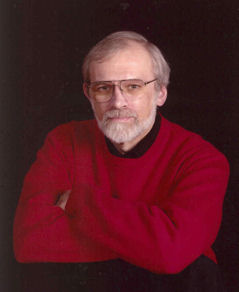
Tuesday, October 21, 2008

Deep Japan

I'm writing this while rolling under the Tsugaru channel on Japan Railway Hokkaido's Super Hakucho ('Super Swan'), en route to Hakodate. We're in the Seikan Tunnel, 53.85 km (33.46 miles) long, 240 m (787 ft) below mean sea level, hence my title, "Deep Japan".

There are several reasons why I've come to Japan. The largest concentration of humanity in the world is the Tokyo-Kawasaki-Yokohama conurbation. The total land area is about the size of California, but only one fifth of the land is flat enough to farm - the rest is mountainous. The countryside is really beautiful, deeply revered, and lovingly cared for. It's the second largest economy in the world, and the standard of living compares well with that of other indistrialized nations. These folks must know something about sustainability.

The Japanese also have remarkable rail service, and I'm convinced this is a big part of their secret. This Seikan tunnel is only one of many remarkable feats. We all know the Japanese had the first truly high-speed rail service, the Shinkansen "bullet trains" that entered service between Tokyo and Osaka in 1964. The train I'm on now is not a Shinkansen, just a "limited express" running between two provincial cities. It's still fast, and incredibly quiet.
I've been in Japan now for two full days and have ridden on several electric multiple-unit trains, two Shinkansens, a diesel multiple-unit train, and a steam-hauled excursion train. Every one of these has been on time, to the minute. Every one has been clean and staffed by friendly, courteous, helpful people.

Japan also has at least twenty private passenger railways. All suburbs of major cities are served by railways, and all the major cities have more than one railway company serving them. Thousands of tiny towns are served by passenger rail.
All cities and towns have bus service. Many medium-size cities still have streetcars running, though unlike Europe these mainly run "antique" streetcars. Although there are lots of automobiles, they are not necessary, since public transportation, walking, and bicycling are available and fostered everywhere.

I spent last night and this morning in the city of Sendai, which is two hours north of Tokyo by shinkansen, and about the size of Detroit (1,028,214 in 2005). The downtown area is centered around the railway station, which has Shinkansen service, several local rail lines, a city subway line, and many bus lines. Our hotel and several large stores are connected with the station complex by an elegant elevated walkway. There is a shopping arcade that totals six blocks in length. The buildings are densely clustered throughout the city and high rise buildings are common, but there are several large parks (including a ruined castle). It's a city I'd enjoy living in.

OK. This blog entry is long enough. More about Japan later.

References:

Sunday, October 12, 2008

Wake Up Washtenaw White Paper: 2. Background

Our White Paper series continues with the second section:

2. Background


Climate change. High cost of energy. Growing congestion. Michigan's plummeting economy.

How can we solve all these problems?

The answer lies in taking world-class methods and applying them with American ingenuity and know-how. The place to start? Right here in Washtenaw County.
There are many groups working on these problems: climate, energy, congestion, the economy. What we need is to get all these groups working together.

The key to all these problems is to build sustainable, transit-oriented communities. Sustainability requires minimum dependence on outside resources, including food, energy, and waste management. We have the technology to build sustainable communities; what we have lacked is the collective will to do it. We are now coming to realize the need for sustainability, and with that realization comes a growing will act. There is a realization that we have become dependent on food grown thousands of miles from us, and low-cost transportation can no longer be expected. We all know that heating and cooling costs are spiraling out of control, and we need to find alternatives to fossil fuels if we want to continue to live comfortably.

Why transit-oriented? Because transportation is the largest single factor determining how populations settle and build communities. Civilization as we know it depends on being able to move people and goods around.

The latter half of the twentieth century in the United States based almost all its transportation and settlement patterns on highways. Individuals gained freedom of movement by owning personal automobiles, and distributers of goods gained flexibility by using large trucks.

This was successful and liberating as long as (1) fuel was inexpensive, (2) the number of vehicles did not exceed the capacity of the highway system, and (3) a significant proportion of the population was able to afford private vehicles. But each of these three conditions is now seriously challenged. About 30% of energy expended in the United States is used to move people and goods around. Privately owned vehicles (POVs) now demand an increasing share of personal and community resources.

Though effective at providing flexible transportation, POVs are not efficient for moving large numbers of people. We need communities built for convenient walking and accessible to efficient transportation, in order to free us from dependence on fossil fuels, reduce greenhouse gas emissions, and turn around the economy.

But...

They say it can't be done: "Michigan's history and spirit is too deeply rooted in the private automobile." "We can never expect Michiganders to embrace any solution that isn't based on cars."

They say it can't be done: "Michigan's politicians and developers are too happy making money from the status quo." "They'll never be proactive enough to invest in new solutions."

We say, it must be done. Future generations of Michigan residents will trapped in poverty and unsustainable communities if we don't act now.
One extremely valuable and insightful guide is Michigan Future's Progress Report:

To us the clear message from the data we have just reviewed is the key to economic growth is talent. Quite simply, in a flattening world, economic development priority one is to prepare, retain and attract talent.

There are no quick fixes, the Michigan economy is going to continue to lag the nation for the foreseeable future. But there is a path back to high prosperity. As is laid out in our New Agenda report, we believe the framework for action is:
  • Building a culture aligned with (rather than resisting) the realities of a flattening world. We need to far more highly value learning, an entrepreneurial spirit and being welcoming to all.
  • Creating places where talent - particularly mobile young talent - wants to live. This means expanded public investments in quality of place with an emphasis on vibrant central city neighborhoods.
  • Ensuring the long-term success of a vibrant and agile higher education system. This means increasing public investments in higher education. Our higher education institutions - particularly the major research institutions - are the most important assets we have to develop the concentration of talent needed in a knowledge-based economy.
  • Transforming teaching and learning so that it is aligned with the realities of a flattening world. All of education needs reinvention. Most important is to substantially increase the proportion of students who leave high school academically ready for higher education.
  • Developing new public and, most importantly, private sector leadership that has moved beyond both a desire to recreate the old economy as well as the old fights. A leadership that is clearly focused, at both the state and regional level, on preparing, retaining and attracting talent so that we can prosper in the global economy.

What does talent have to do with sustainable development? In a word, everything. Talented young people are very aware of the crisis looming over our world's climate and our American way of life. They are attracted to innovative solutions to these problems, and eager to lend a hand to make them work. Communities that are built to address these problems are vitally interesting to them; on the other hand, regions that lag behind and cling to old, unsustainable models repel talented young people.

Our American values have long said that responsibility for improving our children's education lies primarily in the public sector. At the same time, American values have put community development in the private sector, though with oversight from the public. While the public sector focuses on retaining and improving Michigan's educational advantages, the private sector should be empowered and encouraged to develop communities that attract talented, mobile young people.

Wake Up Washtenaw sees its role as (1) empowering responsible development through community action to revise our zoning codes, and (2) inviting and encouraging responsible developers and Michigan citizens to invest in sustainable development.

Sunday, October 5, 2008

The Wake Up Washtenaw “White Paper”: Overview

This is the first in a series of posts airing the first draft of Wake Up Washtenaw's "What Paper". It's out here for your comments and suggestions, so have at it!

Overview

Wake Up Washtenaw is a non-profit citizens' organization encouraging sustainable, transit-oriented development by private groups in Washtenaw County.
  • We encourage sustainable development that is carbon-neutral, and when possible, is able to provide basic food needs and take care of its own waste stream.
  • We encourage walkable, transit-oriented development that enables residents to get to their jobs, shopping, recreation and worship without the need for privately owned vehicles.
  • We encourage development by a consortium or similar group of private businesses and residents, rather than depending on public funding.
  • Now is the time to begin: a low point in the economic cycle is a good time for planning new projects and investing in the necessary resources. In addition, the certainty of climate change and the limits of fossil fuels have brought public awareness to an all-time high.
It's not enough for citizens to wait for "them" to do something about our changing needs. It is necessary for all of us to work together to make sustainable living possible - and profitable.

Thursday, September 25, 2008

Detroit's Regional Transit Plan

Yesterday (September 24) consultants for the Detroit Regional Transit Coordinating Council held their fall open house, to let the public in on their plans. There was a series of poster boards, with 4-5 staff members to give guided tours (thanks, Lynn!). The Detroit News had a survey on line: 72.86% in favor of the plan, after I voted for it (72.85% in favor before I voted). The comments area had 16 posts with a surprising number of intelligent, positive comments. Of course, all the predictable nay-sayers were there too, including the "Michigan=cars" folks, the "not with my tax dollars" folks, and those who said Detroit should be made accountable for the tax revenue it has before going out to ask for anything more. (The last is certainly true, but I fear such a requirement would doom the city to permanent stagnation.) What follows is my comment on the forum.

My main complaint about the proposed plan is that it's too slow. The completed build-out wouldn't happen until 2035, but by then the number of people who can afford to drive a car will be relatively small.

Sure, we can hope some new technology will come along to make driving cheap again, but if it does, we'll still have the congestion problem. Build more freeway lanes? Sorry - recent history shows that more lanes only lead to more congestion.

There are always people who don't want to pay taxes for which they see no immediate, personal benefit. That's understandable, but not justifiable. Our taxes should pay for investments that will benefit our community as a whole, including city, county, region, state, and nation. And not just for right now: we need to start making investments that will benefit our kids and grandkids.

If Cobo Hall and the zoo are investments that bring culture and profit to Detroit, transit improvements will be even farther-reaching. There are at least 10 US cities that have recently installed light rail transit, and every one of them has experienced increased regional growth, higher real estate values, and more tax revenues. It really isn't a boondoggle, it's an investment, not just for Detroit but for the entire region, not just for the next few years, but for the next few generations.

So let's do it, and let's do it even sooner than the plan calls for.

Tuesday, September 9, 2008

The city in Mexico

I recently came back from a month teaching in Mexico. Gave me a chance to think about cities and how people organize them. While there's a lot we don't want to emulate about Mexican cities, there's also a lot we can learn from them. I was teaching linguistics in the city of San Luis Potosí this year and in 2007, and I've visited the states of Jalisco (Guadalajara, Chapala, Ajijic, and Mezcala); Oaxaca (Oaxaca city, Mitla, Jalapa de Díaz, and Tuxtepec); Guerrero (Tlapa); and Mexico City itself.

City Growth

Mexico had cities long before we did in the US, so there's a lot about them that's more like the old cities of Europe and Asia. Most of them grew "like Topsy", without any pattern or preplanned design. There appears to be little or no zoning - no effort to channel growth of certain types into desired areas. On the other hand, almost all Mexican cities have a clearly defined center built around a town square, known in Mexico as el zócalo. Around this square one finds the main church, government buildings, and shops. Often there are historic residences of a colonial governor or other high official. The middle of the zócalo usually has a shelter, variously used as a monument, a band shell, and a place for couples to share romantic moments. Most zócalos have trees, benches, statuary, and fountains - originally the main source of the town's drinking water. Weekend evenings often see bands playing, people dancing, and families strolling in the zócalo. (Mexicans tend to be more likely to spend time together as families than we are in the US.) The zócalo of Mexico city is an exception, in that it is entirely paved and has no greenery - it is in front of the Mexican equivalent of the White House, and is used mostly for political rallies, demonstrations, and parking for tour buses. The equivalent gathering places for this city (largest in the Western Hemisphere at 19.2 million in 2005) are the Alameda Central and the Bosque de Chapultepec, reminiscent of New York's Central Park.

From the zócalo most Mexican cities have grown outward organically. Thoroughfares mainly following the natural contours of the land. The smaller streets are defined more by blocks of buildings, rather than blocks being defined by streets. This follows an ancient pattern found, for example, in Roman cities. There, a "block" was called insula, an "island". This insula presents a solid front, right up to the sidewalk. The original purpose was defensive, and that purpose has not changed. There is still, and probably always will be, a need to protect one's goods and family from marauders, whether the are enemy tribes or burglars. Residences and shops are found in all neighborhoods. Above most shops are the residences of the family that owns them. One block may contain several small eateries (taquerías), a couple of auto repair shops, four or five general stores (abarrotes), a laundry, and perhaps some offices. This "mixed use" pattern makes it possible to make most purchases without driving anywhere, or even walking very far.
By comparison, a US neighborhood of approximately the same socioeconomic bracket is more spread out, with wide setbacks from the street and spaces between the houses, most of which are segregated from shops.

Open space

Instead of open space on the street - what we call "setback" in US zoning codes - there are walls right up to the sidewalks. The lawns and gardens are within the walls or behind the houses, perhaps in the form of a courtyard. This too is based on the Roman insula pattern. Gardens in upper-class houses are quite sizable, but the average open space in urban Mexican middle-class housing is much more modest. Lower-class houses have a multi-purpose open space used for cooking, washing, and possibly a vegetable garden, depending on the size and on what the family wants to do with it. The result is much more compact or "dense" housing, but with a greater sense of privacy when in "the family". For a sense of community, the Mexican family typically goes to a park and mingles with other townsfolk in the evenings and weekends. Parks are much more heavily used and more "decorative" than many US parks, in that they have more statuary, fountains, and flower gardens, where a typical US suburban park is mainly grass and trees with some children's play equipment. It is common to see lots of people jogging, walking dogs, bicycling, playing soccer, necking, and just "chilling out" in parks from early morning to late evening.

Transportation

Private cars are very popular in Mexico, and though SUVs, big pickups, and minivans are much in evidence, the average car is somewhat smaller than in the US. There are several small US models from Ford and GM that aren't available in the US, such as the Chevy C2 Comfort. Traffic is so bad in Mexico City that there is a "rationing" system, prohibiting cars with certain license numbers from entering the city on given days of the week.

Public transportation is frequent and reliable in most of Mexico (I can't speak first-hand about the southernmost parts, Chiapas and the Yucatán region). Mexico City has 12 subway lines, plus Bus Rapid Transit, light rail, and has recently added a commuter rail line. Guadalajara, though a distant second in population, has two subway lines. All other Mexican cities rely exclusively on buses and taxis. In comparison with US buses, Mexican urban buses are simpler and less expensive. They are not air conditioned, all have manual transmission, most are somewhat smaller (25-35 passengers), none are low-floor or "kneeling" buses. All are made in Mexico and probably cost one quarter to one third of what a US transit bus costs. On the other hand, they are very frequent, they run on many different routes, inexpensive (typically about 50 cents US) and the bus drivers will always make change for you (unless you give them a large bill for a small fare). During the day (including weekends) they run frequently enough that you don't have to worry about the schedule. There will be a bus on your route every 5-10 minutes. This is made possible by the compact urban design and relative density of the population. What they lack in elegance, Mexican urban buses make up in good service. (Intercity buses, on the other hand, offer both elegance and good service.)

Taxis are much more available and inexpensive than in the US. Though rumors of unscrupulous taxi drivers circulate, I have never had a problem with any. Well, hardly any. There was one taxi, a large American car that waited outside the tourist hotel in Mexico City where I stayed a couple of times, that had no meter and charged me the equivalent of $10 USD for less than two miles on a Sunday morning. (But the driver was very friendly and helpful, and it was Sunday.) All the other taxis had meters and charged exactly what was on the meter - no round-about routes, no charge for extra passengers, and no tips expected. Typical in-city fare in San Luis Potosí was $2-3 USD. Oh yes: taxis to and from airports and major bus stations - the "safe" kind that you pay for in advance inside the terminal - are at least twice as expensive. You pay for your "security".

The typical taxi in Mexico these days is the Nissan Tsuru, a model based on the 1991 Sentra and made in Mexico (Aguascalientes), not available in the US. It's a compact 4-door model, said to be quite reliable and economical. The taxi drivers all liked them pretty well. Much safer and more roomy than the previous Mexican taxi favorite, the classic Volkswagen beetle, also made in Mexico and usually with the front passenger seat taken out for ease of access, known affectionately as a Vocho.

So...

The design of Mexican cities is chaotic in many ways. It's easy to get lost in most because of their unplanned street arrangement - the main exception being Puebla, which was designed and laid out with rectangular blocks and straight streets in 1531 by a priest (local legend says by two angels). The dense design makes it difficult to widen transportation corridors. Sometime in the last century, Mexico City planners superimposed a system of axial roads to make cross-town travel simpler and quicker, but it must have been done at the expense of many old buildings that stood in the way. Later, they did the same to add expressways. Other transportation features, such as the intercity bus terminals, have often been added in inconvenient places, far from the center of town, though close enough in that buses have to fight considerable traffic to get in and out of towns.

Still, I like a lot about Mexican cities: the compact design, the convenient shopping, the central zócalo bringing a beautiful human and social focus to the urban center, the omnipresent, convenient public transportation, and the generous, artistic park spaces.

Sunday, June 22, 2008

It can't be done

I've had several people tell me it can't be done. Trying to build sustainable, transit-oriented developments in Washtenaw County won't work.

There are many reasons given for this. Older people - very intelligent, aware, conservative people - are convinced Michiganders are too attached to their cars. That they would be willing to pay an arm, a leg, or both, rather than give up driving everywhere.

Middle-aged people, including a prominent, liberal Ann Arbor environmentalist, are convinced the political leaders and the development companies are too happy making money with sprawl developments. They are perfectly willing to talk the talk, but not walk the walk to sustainability. The county is led by "greenwashers", people who know the advantages of sounding environmentally concerned, but aren't really willing to forego the short-term gains in "business as usual".

So what's a concerned citizen to do? Give up?

Here's my perspective. Right now, my grandson is 3 years old. I know that if I don't work for sustainable development, he will probably leave Michigan and go someplace where people have been willing to invest in future generations. My son has already left - for Seattle. Or my grandson will stay here and live a life of hardship, scraping by in an environment that isn't prepared for gas that tops $20 a gallon.

I've been told I'm wasting my time, beating my head against a brick wall. You can't fight city hall. Well, OK, so this is a "hard-hat zone". That doesn't mean the brick wall should be there, or is going to be there forever. Unless a few people are willing to don hard-hats and start beating against brick walls, our kids and grandkids will be buried under the rubble when the wall crumbles. The wall will fall, because the changes their generation are going to see will be like Katrina and the Szechuan earthquake put together.

So to those who say "It can't be done," I've got to respond, "It must be done". I'm not willing to put my feet up and let my grandkids face problems that I didn't have the guts to face.

"Never doubt that a small group of thoughtful, concerned citizens can change the world. Indeed it is the only thing that ever has."
  • Margaret Mead

Wednesday, June 11, 2008

The American Dream

I came across an interesting organization on the Web today: the American Dream Coalition. Linked to their star-spangled, red-and-white striped home page is their latest report: "The Greatest Invention: How Automobiles Made America Great." The report cover features automobiles of the 1940s through 1970s.

What initially drew my attention to their site was their response to Christopher Leinberger's much-quoted article on the "death of the suburbs". Here's their central point:
Death of Suburbs?
Professor Leinberger anticipates a future where “large-lot suburban McMansions fall into disrepair and affluent buyers flock to walkable downtowns.” By 2025, suburbia will become “a residential wasteland.”
Where have we heard this before?
Sorry, Professor, but we will get over the high prices of energy, or we will adapt to them. But suburbs will not die, for this is where middle income families go to pursue the American Dream - a home with a backyard and nearby ball fields, places of worship, and other amenities. There’s less crime in the suburbs, less congestion, less polution, less . . . er, disease. And suburbs are more affordable than central cities. Much more affordable.
I'm not sure where they heard this before, though they seem to be implying a source of information already discredited by their readers. Unfortunately, Leinberger is not totally "anticipating" a residential wasteland. He bases his discussion on extensive observation of home pricing in different types of neighborhoods, on reported vandalism, and on comparative increases in crime in different areas. Apparently, this future is here.

What an interesting statement: "we will get over the high prices of energy, or we will adapt to them". This is very insightful. At least it gives me insight into why there is so much push-back against energy efficient solutions to our situation. But there are two possible reasons for the optimism expressed in that statement:
  1. Trust in the certainty that technology will overcome the eventual depletion of fossil fuels; or
  2. Trust that the high prices of energy will go away, and we can continue as before with no change of lifestyle.
To some extent, I share their hope that technology will overcome our energy crunch - but not their apparent faith in our ability to continue as before. I can't keep the picture of an ostrich from popping into my mind's eye. All the solutions I've heard of so far have started with a reduction in our energy budget, at least to the level of European consumption.

Our friends at the American Dream Coalition continue, "But suburbs will not die, for this is where middle income families go to pursue the American Dream - a home with a backyard..."

I have to admit it, though. Yesterday I was sitting on the deck having lunch, thinking of how I enjoy my back yard: its privacy, its leafy green shade, the squirrels, the birds, the bunnies. It would be hard to give up the traditional suburban back yard.
But at the same time, I think of Little Shop of Horrors, that quintessential high school musical, where the heroine Audrey poignantly expresses, in the song "Somewhere that's Green," her wish to fulfill the American suburban dream. She ends up consumed by the man-eating plant "Audrey II". Is this an allegory? Does it foreshadow how the American Dream has turned into the American Nightmare? Giant, twisting freeways, choking with endless lines, bumper-to-bumper, of "the greatest invention"?

Continuing that thought, our friends write, "a home with a backyard and nearby ball fields, places of worship, and other amenities." The backyard may be nearby, but almost invariably the ball fields, places of worship, and other amenities are not nearby enough to walk. Every place worth going to is only accessible by car.

I have nothing against cars. I don't hate them - one blogger once accused me of hating cars. But I do hate having no realistic choice other than cars. They consume an unreasonable proportion of people's time and money. People who can't afford a car are locked out of the American dream.

"There’s less crime in the suburbs, less congestion, less pollution, less . . . er, disease. And suburbs are more affordable than central cities. Much more affordable." Query: If suburbs are so much more affordable, why are central cities inhabited by the poor people (disease-ridden criminals!)? That sentence in itself is worth a couple of blog entries dealing with the outdated perceptions and the covert racism. Suburbs are only more affordable if you ignore transportation costs. Clearly, whoever wrote that statement doesn't want us to think clearly.

Also, suburbs are afflicted with one of the greatest epidemics of our time: obesity. Obesity is linked with blood pressure problems, heart disease, diabetes, and who knows how many other conditions. It is brought on by unhealthy aspects of the suburban life: over-dependence on cars, riding-mowers, leaf blowers, snow blowers, over-indulgence in fatty foods, beer, and video games.

If we are not to end up consumed by the American dream, we had better start thinking seriously about what this dream means. And no more ostrich thinking, please.

http://americandreamcoalition.org/adcblog2/?p=675